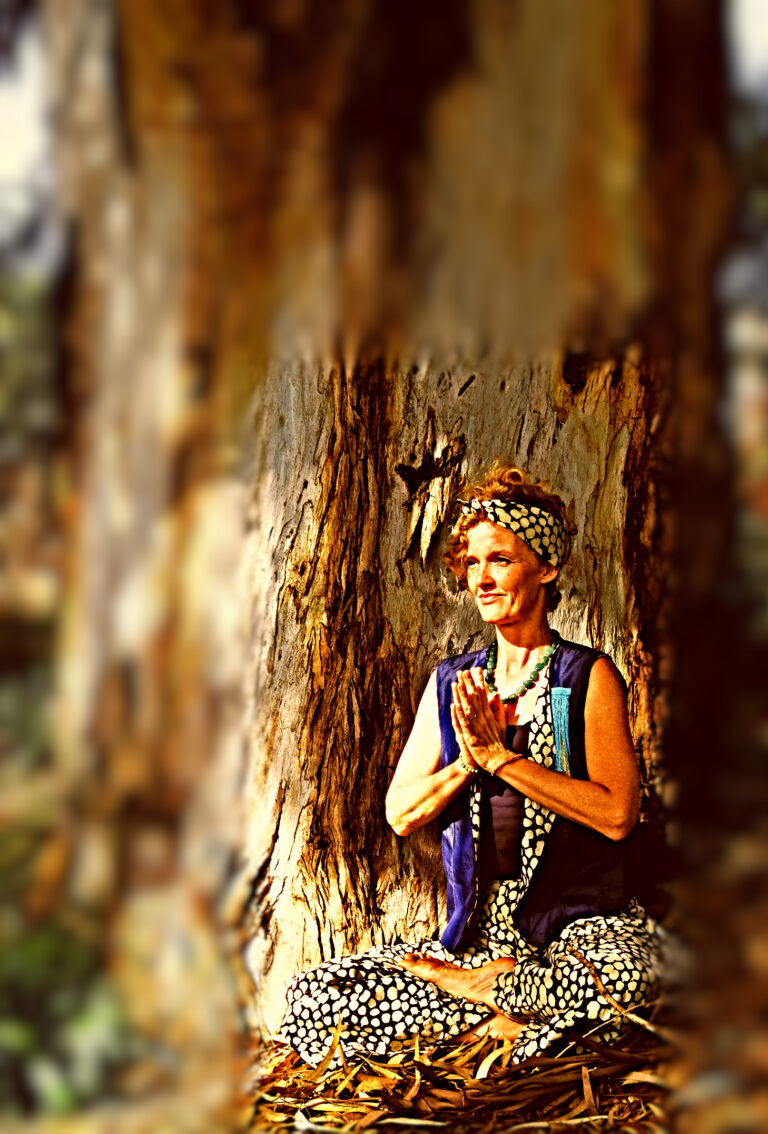
I have always been a firm believer that everyone has their own path in life to follow, regardless of the challenges. Sometimes I wish that belief wasn’t part of me, because how many challenges would you have to face in your life and where would they eventually lead to? That’s my negative and critical Kundalini body speaking… Challenges are big confrontations with who you are naturally and as a person deep down and so I would like to say that they are necessary to fully live them through, regardless of how painful it can be.
I remember my husband saying when our first baby was in my belly “He’s a happy little soul” and that is so true. He has already faced quite a few big challenges in his young life, but that essence of a ‘happy little soul’ keeps on showing up through everything. A major quality! And I do think that what babies have/show and/or let you feel, is what should be stimulated all way through, because when they ‘lose’ it, as they grow up, go through different life stages and challenges, that’s what they will eventually try to rediscover.
I wonder whether many of our challenges are not so much about losing that essence, but about forgetting where to find it. Life happens. We experience joy, heartbreak, disappointment, success, love and loss and each experience leaves an imprint.
Over time, these imprints shape the way we think, feel and respond to life. They influence what we hold onto and what we push away. And before we know it, we can find ourselves reacting not from the essence of who we are, but from the accumulation of everything that has happened to us.
And that’s why yoga should be practiced in its full essence at any time, rather than a physical practice. It lets you do the ongoing work in relation to the past, the present and the future and that’s why you can move through the challenges without losing yourself, more in a dignified way.
And you might know yourself how your mind might go into all directions “if this happens, I will do that, because I am so angry, so disappointed and I want to blame him/her…” In every situation, we are responsible for our own actions, deeds and I would dare to say our thoughts.
Why? Because there are so many layers (in yoga) and what I describe here, that’s part of the first layers, influenced by a scattered mind and emotions. Whereas if you are going to sit with it, focus on deep breathing – and I’m sorry, but breathing is really not a cliché! – possibly beyond it with deep pranayama techniques, there can be a place of acceptance, clarity and insight on how to move through the challenges and their complexities without the urge anymore to scream, punch something or blame someone. Having said that, hitting a pillow, screaming out loud when you’re alone, biting a towel, they’re all good methods to use initially…and to release, but then you need to collect yourself again and go beyond that.
The philosophy of Patanjali is just so essential in life. The eight limbs of yoga, as part of the Yoga Sutras, provide a step-by-step framework to live a meaningful, purposeful life and achieve high spiritual insights, if not liberation. And this path doesn’t start with asanas, the physical postures, or even with pranayama, but with ethical moral codes in relation to our interaction with the world and internal disciplines and positive duties, respectively Yama and Niyama.
One of the Yamas that I want to address here is Aparigraha, which at surface level looks like non-possessiveness, letting go of attachments, but it is about the deeper tendency of consciousness to hold onto anything as “mine”. Think of: objects, relationships, identities, beliefs, emotions and memories. Today I am particularly interested in looking at the connection of memories.
An interesting paradox appears when looking at classical yoga texts:
Yoga asks us to release attachment to memories, yet the Yoga Sutras also say that mastery of Aparigraha can lead to knowledge of past lives and previous births. So, it’s important that memory isn’t rejected, but to understand that the challenge lies in the attachment to the memory.
How is memory then defined in the Sutras?
Patanjali defines it in Sutra 1:11 as “anubhūta-viṣaya-asaṁpramoṣaḥ smṛtiḥ”.
Memory is the non-loss of an experienced object. Memories aren’t isolated events, but they are manifestations of deeper impressions. In Indian and yogic philosophy these are called Samskaras: subconscious mental impressions or psychological imprints left behind by our past thoughts, actions, and experiences, like grooves in the mind that form your natural habits, personality, and automatic reactions.
The cycle is: Experience → Samskara → Memory → Reaction → New Samskara, which keeps karma operating.
The key Sutra from Patanjali about Aparigraha is:
aparigraha-sthairye janma-kathanta-sambodhah (2.39)
“When one is firmly established in non-possessiveness (aparigraha), knowledge arises of the causes and circumstances of one’s births.”
The implication here is that attachment itself obscures memory and when grasping ceases, deeper knowledge emerges.
Where does attachment enter?
The Yoga Sutras identify five afflictions (kleshas) and memory fuels many of them:
- Ignorance (avidya)
- Ego-identification (asmita)
- Attraction (raga)
- Aversion (dvesha)
- Fear of loss/death (abhinivesha)
We all love pleasant experiences and they become such good memories. The memory becomes “I want that again”, which is attachment (raga), whereas an unpleasant memory becomes “I never want that again”, which is aversion (dvesha). Identification with the memory causes the problem.
So, you understand that Aparigraha goes beyond “don’t buy too much stuff’, but it looks at how one can hoard memories exactly as possessions. Think of: my suffering, my trauma, my success, my former identity, the way things used to be… These become subtle possessions, creating an ego that lives in a museum of memories.
What does Aparigraha ask then?
Can the memory exist without becoming part of your identity?
Anything that I’m currently writing comes from a deep place of grief and that’s why philosophy is such an important part of life.
When someone dies, memories suddenly take on a different quality. They become precious. Sometimes they feel like the only tangible thing that remains. A photograph. A voice message. A sentence that was once spoken casually but now returns with unexpected clarity, or perhaps question marks. A memory can bring comfort, connection and warmth and it can make someone feel very close, even when they are no longer physically here.
But memories can also become places where we live.
As part of grief, I find myself revisiting moments from our life together. Our conversations, challenges, living in different countries. But also, the ordinary days that seemed insignificant at the time. Sometimes I notice myself wanting to hold onto them tightly, afraid that if I let go, I might somehow lose a part of him. Perhaps that is a natural part of grieving, yet when I look at Aparigraha, I wonder whether there is another invitation hidden within it.
- What if letting go does not mean forgetting?
- What if non-attachment is not about releasing the love, but about releasing the fear that the love will disappear?
The memory itself is not the problem, because the experience happened and the love was real. The life we shared was real. But yoga asks a different question: what happens when we begin to possess the memory?
- When does “I remember him” become “I cannot be without this memory”?
- When does honouring the past become clinging to it?
These are not easy questions, especially in grief, because grief itself seems to move in waves between holding on and letting go.
Perhaps that is why I find Patanjali’s teachings on Aparigraha so relevant at this moment in my life, because they offer a way through grief.
The more I sit with this Yama, the more I realize that Aparigraha is not asking me to release the memories of my husband. It is asking me to examine my relationship with them.
- Can I treasure them without grasping them?
- Can I allow them to arise and pass without desperately trying to preserve every detail?
- Can I trust that what was meaningful in our life together has left impressions far deeper than what my mind is capable of remembering?
And perhaps the hardest question of all:
- Who am I when I stop defining myself through what has been lost?
When I read Patanjali’s words on Aparigraha, I do not hear an invitation to forget the past, but an invitation to loosen my grip on it.
How often do we revisit old memories and relive them as if they are still happening now? How often do we carry an old hurt into a new relationship? How often do we define ourselves by a challenge we faced years ago? And perhaps an even more uncomfortable question: how often do we hold on to an identity because it gives us a sense of certainty?
The yogic view is that every experience leaves an imprint, a samskara. These impressions live within us and influence how we react to life. They can become unconscious patterns that repeat themselves again and again.
Yet Patanjali tells us something remarkable. He says that when one becomes firmly established in Aparigraha, knowledge of the causes and circumstances of one’s births arises.
At first, this seems almost unrelated. What does non-possessiveness have to do with deeper knowledge?
The traditional explanation is beautiful. It is not that Aparigraha creates new memories, but that Aparigraha removes the clutter that prevents us from seeing clearly.
Imagine a lake whose surface is constantly disturbed by wind. The water is there, but you cannot see through it. The moment the surface becomes still, what was hidden underneath becomes visible.
Could it be the same with our minds?
The stories we cling to, the identities we defend, the resentments we carry and even the achievements we proudly hold onto can create constant movement on the surface of consciousness. We become so occupied with protecting and maintaining our personal narrative that we lose sight of something deeper.
- What if the challenge is not to remember more, but to hold less?
- What if wisdom does not arise from collecting experiences, but from releasing ownership of them?
I find myself returning to that thought often, because there is a difference between saying, “This happened to me,” and “This is who I am.”
The first acknowledges the experience whereas the second creates an identity around it and I think Aparigraha invites us to separate the two, so we can honour our memories without being trapped inside them and learn from our past without living there.
To recognize the samskaras that shape us without believing they define us. And ask yourself honestly, what experience in your life remain so vivid and keep on impacting you? That’s the work I am trying to do (with my students) on the mat.
Sources:
Yogajala
Yogastudies