Universal Story & Resonance
When my babies were turning into toddlers I was always insistent on avoiding the word ‘NO’ – unless it was truly a dangerous situation -, because I wanted them to continue exploring and stay curious. I would turn each ‘NO’ into an explanation. Now, as my boys are older, I can’t help but wonder if I used the wrong approach .
My recent podcast conversation with artist Rania Nahdi made me reflect further on “NO” and how often women encounter discouragement or outright refusal:
…No, that isn’t possible for a woman like you…
…No, just stay at home and sew clothes…
…No, this opportunity isn’t for someone like you…
…No, you can’t have it all…
…No, don’t shine too brightly…
These “NOs” can cut deep — they carry the world’s expectations, cultural judgments, or the worried caution of loved ones. Regardless of where we’re from, these “NOs” connect us. Sometimes they echo as gentle warnings, sometimes as sharp doubts, always leaving their mark. For many, the “NO” is alive in the smallest decisions — in holding back when we want to step forward, in saying yes to others and no to ourselves.
Yet these denials aren’t always external. Sometimes, it’s the inner messages that linger—a father whose first reaction was always no, making it harder to ask or express; a career dream quietly set aside; creative longings hushed for the sake of stability; ambitions dulled by exhaustion or expectation. For women everywhere, not only for those far from home, the “NO” lives on: in the body, in stories we tell ourselves, in the pause before we speak, move, or rest.
Yoga Philosophy & Embodied Wisdom
Yoga calls these deep-seated patterns samskaras—imprints left by experience, repetition, memory and history. As each woman walks her unique path, whether in bustling cities, remote landscapes, or entirely new homes, those samskaras show up as sensations: tightness in the chest after another boundary crossed; heaviness in the belly at the memory of refusing her own needs; a subtle withdrawal from self-trust, as if “No” is the safest answer.
Ancient teachings — like that offered in the Bhagavad Gita — reminds us that recognizing these patterns can be the beginning of real freedom. Like Arjuna standing unsure at the edge of battle, telling Krishna all the reasons he cannot possibly move forward. Krishna does not rush him past his hesitation. Instead, he invites Arjuna to see his own doubt, his own “No,” with neutrality and clarity. In this way, yoga asks not for the immediate “Yes” of relentless positivity, but for the brave witnessing of all that arises within: the No, the grief, and—eventually—the tiny, rooting threads of renewed possibility.
Reflection and Reframe
In a world where healing is everywhere, it’s worth asking: Which “NO” has kept you from becoming who you’re meant to be? If that NO had been a YES, how might your life be different?
What if that NO had been a full YES – how would that have shaped you?
It’s hard to listen for “Yes” when our bodies are holding a thousand “No’s.”
But each time we pause, breathe, and notice the sensations — tightness, resistance, the urge to shrink away — we’re opening space for something new to unfold.
This is the heart of yoga: not pushing through, but gently and neutrally witnessing, with compassion.
While boundarylessness is often praised — always saying yes, always adapting, always welcoming more — there lies immense wisdom in a conscious “No” , the one that comes from within!
Being able to notice it. To honor what feels closed, resistant, or tired. To sense the information beneath it: a call for rest, for protection, for gentle inquiry. That’s honoring yourself.
For women living abroad, the “No” may be the refusal to let go of cultural roots. For others, it’s finally drawing boundaries at work, with old patterns or with people who do not truly see her.
Invitation to Practice
What would it feel like to meet the “No” living in your body right now — not with criticism, but with curiosity and care?
This week’s meditation is an invitation to explore your embodied “No.” To notice where it lives — in tension, in a quiet urge to withdraw, in the places you shrink or become silent. You are not required to change or overcome it. Instead, together we’ll hold space for what comes up — inviting breath, presence, and the possibility of a new relationship with whatever surfaces.
Set aside a few moments. Find a quiet place. Bring a gentle mind. And let’s practice together.
Access the guided meditation here or on my Youtube channel.
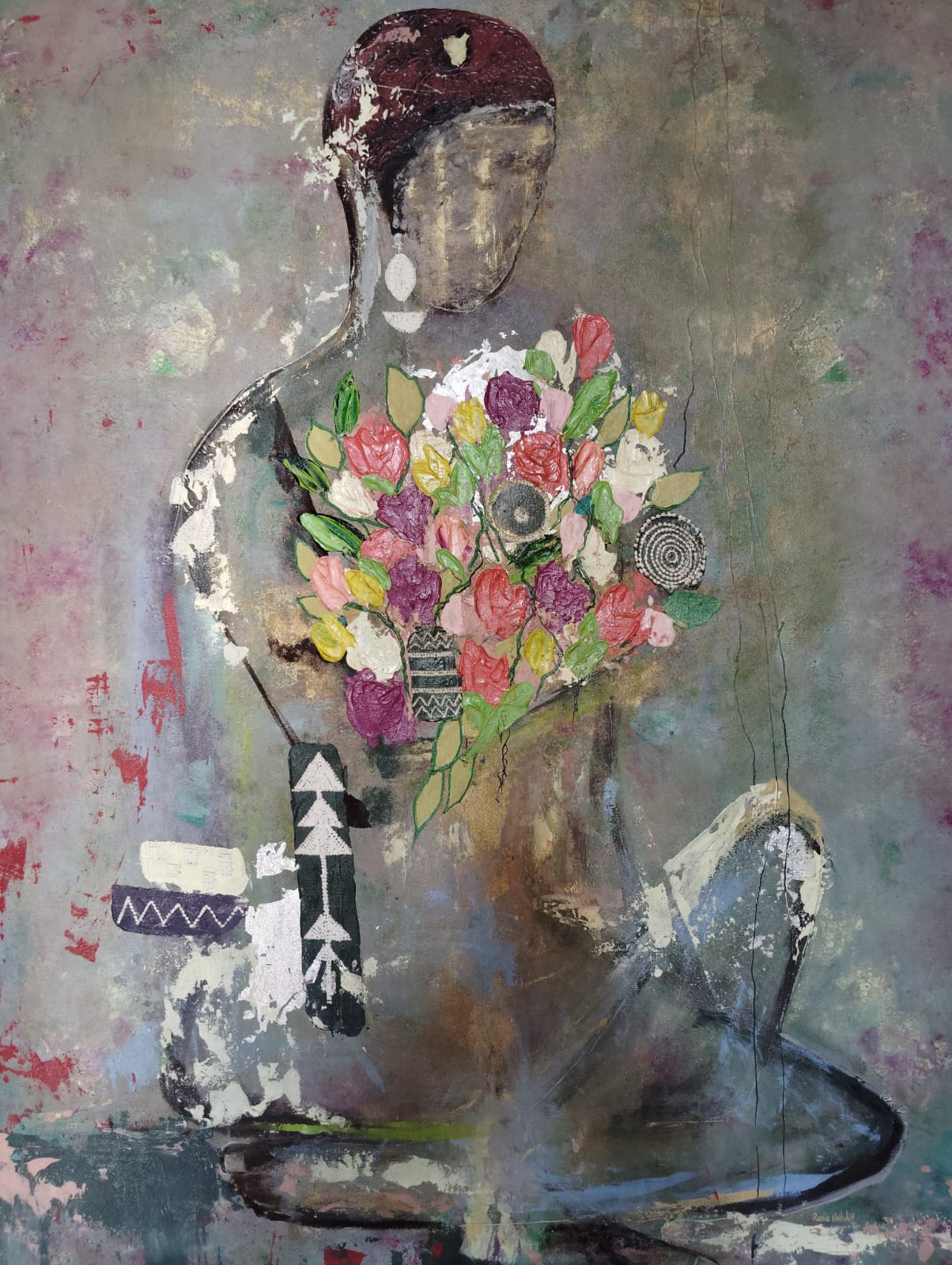
The picture is a painting from Rania Nahdi.